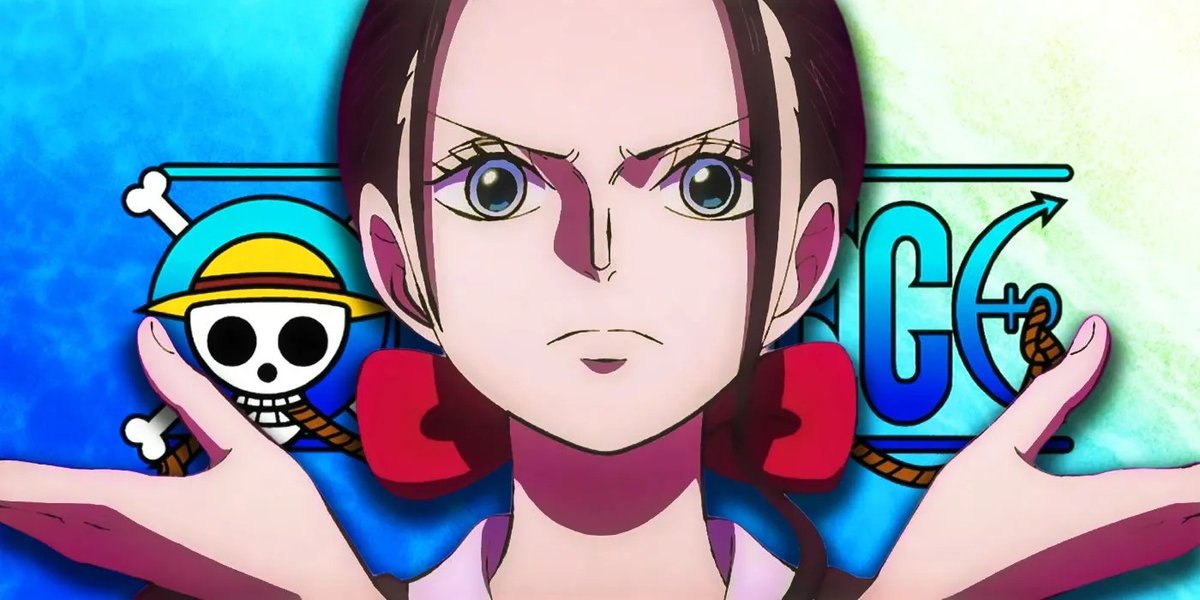
Have you ever wondered if the enigmatic archaeologist Nico Robin could somehow appear in the high-octane world of Dragon Ball Z? It's a fun thought experiment, blending the rich lore of two iconic anime series. However, to put it simply: Nico Robin doesn't appear in Dragon Ball Z because the two series exist in completely separate fictional universes, created by different authors with distinct narrative goals.
While both Dragon Ball Z and One Piece (the series Nico Robin hails from) are global phenomena, produced by Toei Animation, and even occasionally cross over in special non-canonical features, they are fundamentally distinct stories. Dragon Ball Z is Akira Toriyama's epic saga of martial arts, alien warriors, and planet-shattering battles, while One Piece is Eiichiro Oda's grand pirate adventure focused on freedom, friendship, and unraveling ancient mysteries.
The Fundamental Truth: Separate Universes, Separate Stories
The core reason Nico Robin is absent from Dragon Ball Z boils down to the fact that their worlds are entirely independent. There's no magical portal, shared dimension, or hidden connection linking the Saiyan warriors to the Straw Hat Pirates. Each series has its own established history, set of characters, power systems, and a unique creative vision guiding its narrative.
Dragon Ball Z: A Saga of Saiyans, Super Powers, and Earth's Defenders
Dragon Ball Z, a direct sequel to the 1986 Dragon Ball series, picks up five years after Goku's original adventures. It dives deep into the adult life of Son Goku as he, his son Gohan, and a growing cast of allies defend Earth—and often the universe—against increasingly powerful alien threats, androids, and magical beings. From its debut in April 1989 to January 1996, the series captivated audiences across 81 countries with 291 episodes of intense action and dramatic storytelling, adapting the latter 325 chapters of Toriyama's manga.
The narrative arc of Dragon Ball Z is primarily defined by its sagas: the arrival of Goku's brother Raditz in the Saiyan Saga, leading to confrontations with Vegeta and Nappa; the galactic tyrant Frieza's reign of terror in the Frieza Saga, where Goku first achieved his legendary Super Saiyan transformation; the futuristic warnings of Trunks about Dr. Gero's Androids and the bio-Android Cell; and finally, the magical menace of Majin Buu. Each saga introduces new challenges and elevates the stakes, pushing our heroes to new limits. To grasp the full scope of these legendary battles, you'll want to dive into how Dragon Ball Z's iconic villains shaped its story. And for a deeper chronological understanding of Goku's journey, explore a full breakdown of the Dragon Ball Z sagas and their timelines.
Throughout Dragon Ball Z, the focus remains squarely on its own cast, detailing their growth, struggles, and the constant pursuit of greater strength. Key characters like Goku, Vegeta, Gohan, Piccolo, and Krillin form the backbone of a universe where power levels are often explicitly measured, and transformations like the Super Saiyan are pivotal. Understanding an overview of Dragon Ball Z's main characters is essential to grasping the show's dynamic.
Nico Robin: A Seeker of History in a World of Pirates and Devil Fruits
Nico Robin, on the other hand, is a central figure in the One Piece universe, a story about pirates, adventure, and the search for the titular treasure. Born 30 years ago on the island of Ohara, Robin's life has been tragically marked by the pursuit of knowledge. From a tender age, she exhibited extraordinary intelligence, becoming a scholar at just eight years old. Her unique ability stems from the Hana Hana no Mi Devil Fruit, which allows her to sprout body parts on any surface. To learn more about this incredible power, consider exploring Nico Robin's Devil Fruit powers in detail.
Robin's entire existence revolves around deciphering Poneglyphs, ancient stones that contain fragments of the "True History" and the secrets of the Void Century—a period erased from world records by the World Government. This pursuit led to the tragic "Buster Call" on Ohara when she was just eight, making her the sole survivor and earning her the moniker "Demon of Ohara" with an initial bounty of 79,000,000 berries. The harrowing events of the Ohara Incident explain the trauma that defined much of Robin's early life. For a complete picture of her journey, understanding Nico Robin's age and timeline is crucial.
After two decades on the run, hunted and betrayed, Robin's life took a dramatic turn when she joined the Straw Hat Pirates. Her journey with them, especially during the pivotal Water 7 and Enies Lobby arcs, solidified her bond with the crew. Her declaration, "I want to live! Take me out to the sea with you!" is one of One Piece's most iconic moments. Dive deeper into the full story of how Nico Robin joined the Straw Hats and witness the emotional intensity of the Water 7 and Enies Lobby arc, which were pivotal for Robin's character. Her lifelong quest to uncover the secrets of the True History and Poneglyphs remains a core motivation.
Why a Crossover is (Virtually) Impossible
While the idea of Goku fighting alongside Luffy or Robin using her abilities to decipher ancient Saiyan texts might be appealing, the fundamental differences in their universes make a canonical crossover impossible.
Different Creative Visions and Authorial Intent
Akira Toriyama crafted Dragon Ball Z with a clear focus on martial arts progression, alien lore, and epic battles. The series is known for its escalating power levels, dramatic transformations (like the iconic various Super Saiyan forms), and a relatively straightforward good-vs-evil narrative. Eiichiro Oda's One Piece, conversely, is a sprawling adventure saga with intricate world-building, complex political intrigue, and a strong emphasis on character backstories and the pursuit of dreams and freedom. The storytelling philosophies, while both brilliant, are distinct.
Incompatible Power Systems and Worldbuilding
The power systems in each series are wildly different. Dragon Ball Z relies on ki manipulation, physical strength, and energy blasts, where characters can destroy planets. One Piece features Devil Fruits, which grant unique, often quirky, powers at the cost of the user's ability to swim, alongside Haki, a form of spiritual energy. Integrating these would require a massive overhaul of both series' established rules. How would a Devil Fruit user fare against a Kamehameha wave? How would ki users react to sea prism stone? These are fundamental differences that would disrupt the internal logic of either universe.
Timelines and Narrative Cohesion
The chronological settings of Dragon Ball Z (from 1989-1996 for the original run) and One Piece (starting in 1997 for the manga, 1999 for the anime) also reflect distinct eras. More importantly, their internal timelines are entirely separate, with no shared historical events or parallel universes that could naturally merge them. Even when Dragon Ball Z introduced non-manga filler arcs, like the Garlic Jr. Saga, which explains DBZ's fillers versus manga canon, it stayed strictly within its own established universe. The creative path for Dragon Ball continued with Dragon Ball Z's transition into Super, but always within the same consistent universe.
Exploring the "What If": Fan Theories and Crossover Dreams
Despite the canonical separation, the immense popularity and cultural impact of both series naturally lead fans to imagine "what if" scenarios. Dragon Ball Z itself has left an undeniable mark on global pop culture, inspiring countless artists and storytellers. For a deeper look into its enduring influence, read how Dragon Ball Z's cultural impact and legacy continue to thrive. These hypothetical crossovers, whether through fan fiction, fan art, or non-canonical specials like Cross Epoch (a one-shot manga by both Toriyama and Oda that features their characters interacting in a lighthearted, non-serious way), are a testament to the love fans have for these worlds. They allow for creative freedom and fun interactions without needing to adhere to the strict rules of their respective canons.
Ultimately, Nico Robin's absence from Dragon Ball Z isn't a plot hole or an oversight; it's a testament to the distinct, rich, and self-contained universes that Akira Toriyama and Eiichiro Oda meticulously crafted. Each character, from Goku to Robin, plays a vital role in their own incredible story, offering unique adventures that continue to entertain millions worldwide. While they may never share a canonical battlefield or archaeological dig, their individual legacies stand strong, inviting us to appreciate the unparalleled creativity behind each masterpiece.